Hall / Halle
Markus Hoffmann
Zirkon Ouroboros, 2025
ENGLISH
Installation
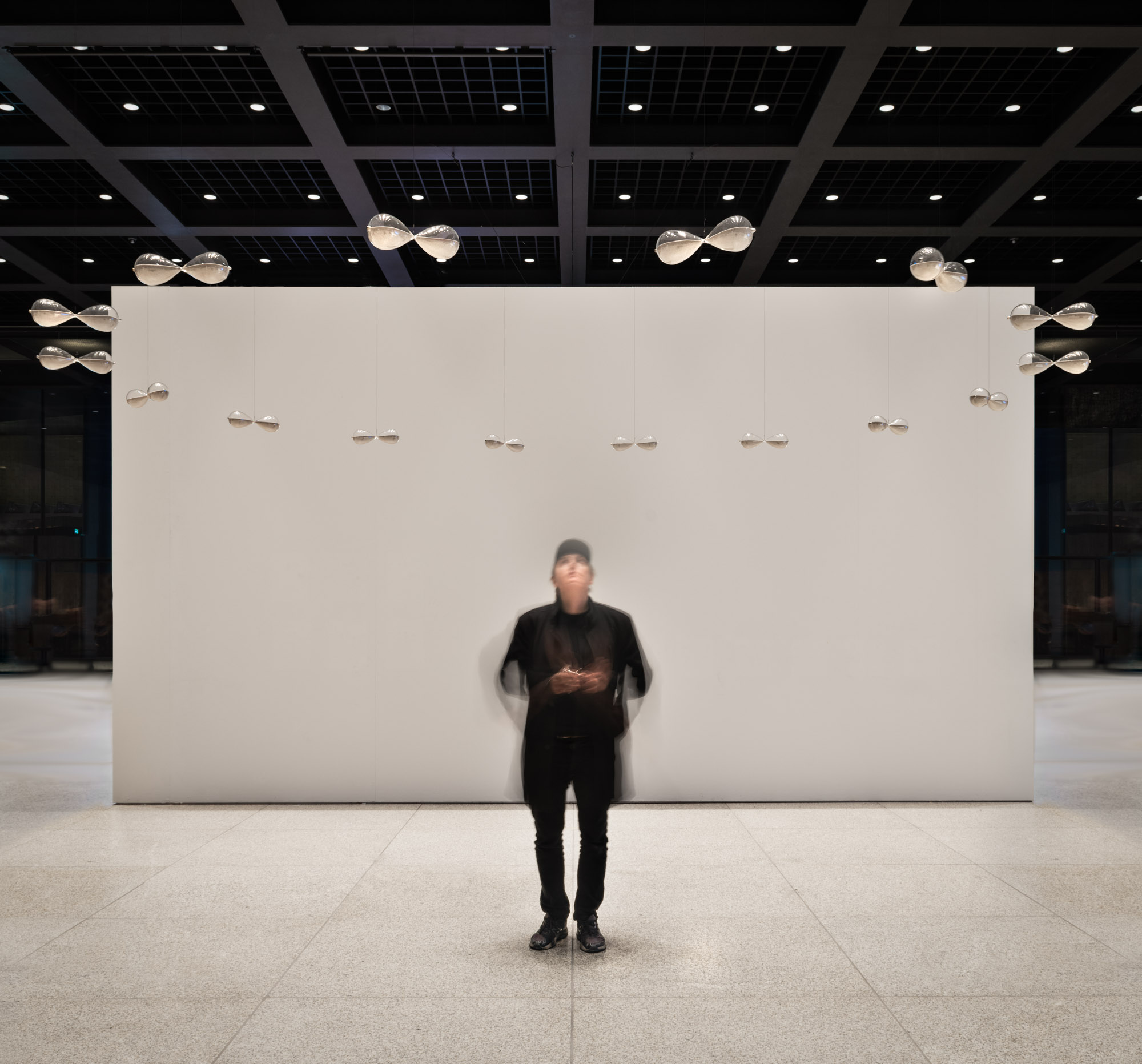
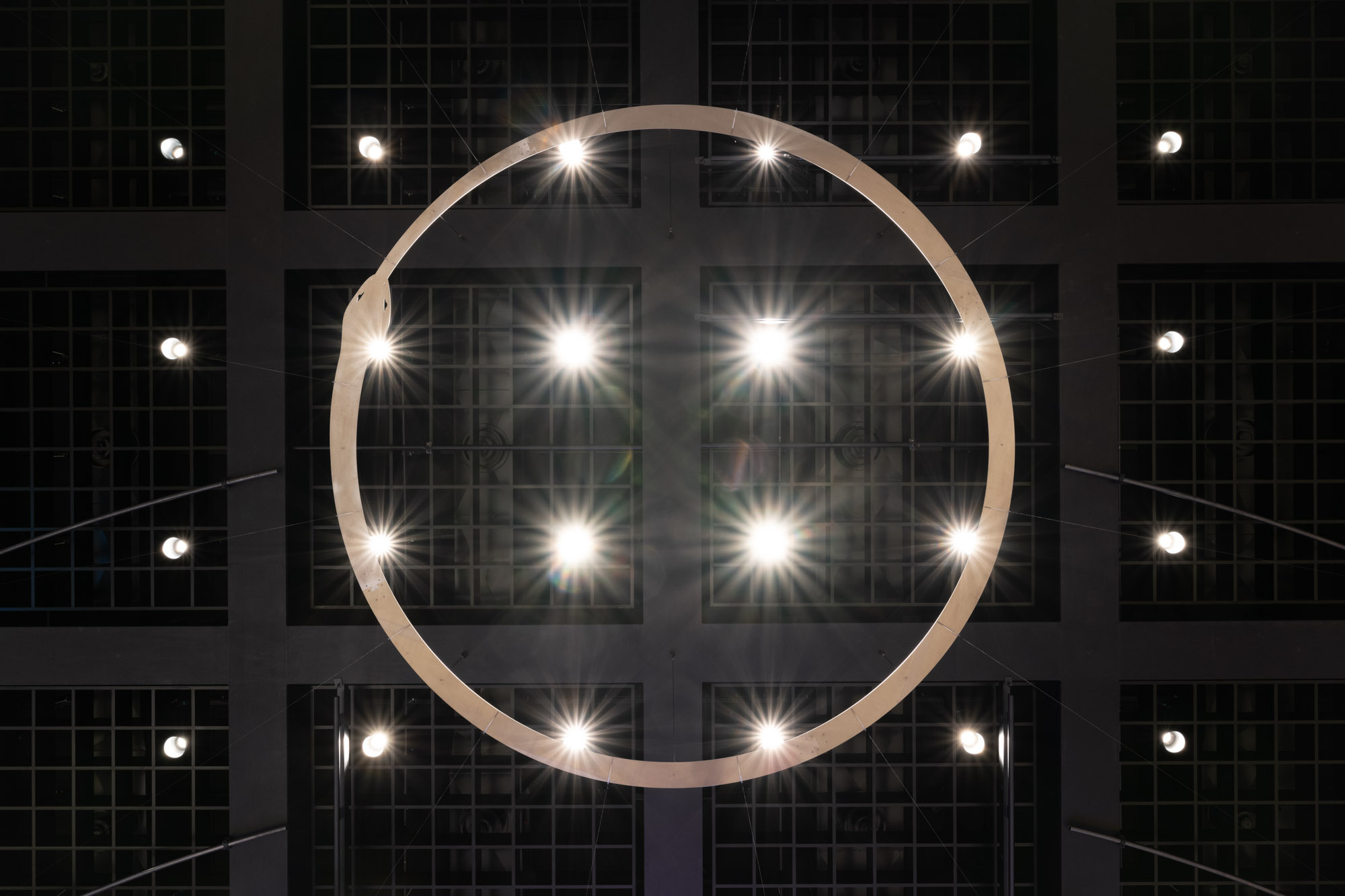
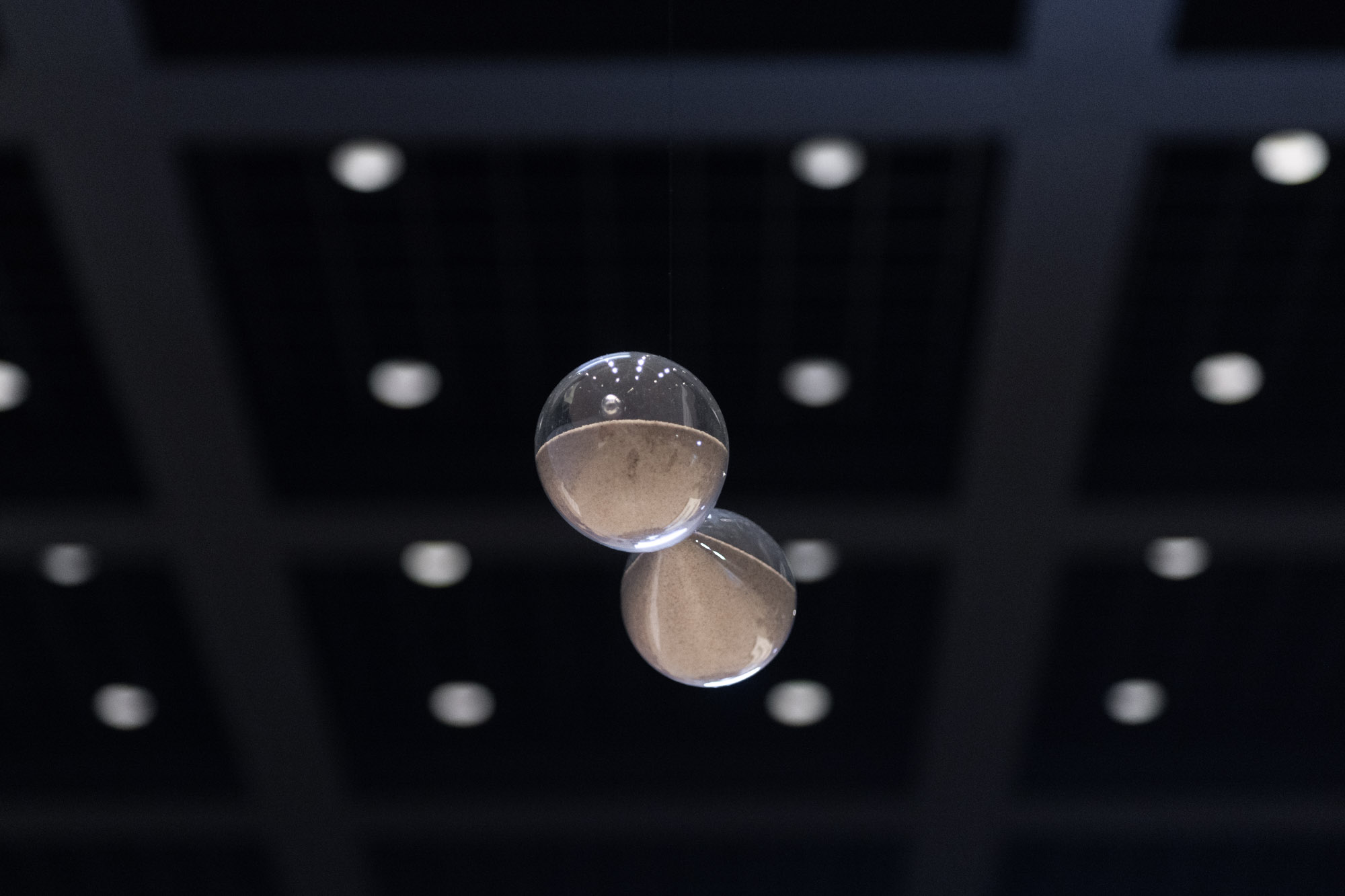
Zirkon Ouroboros consists of sixteen hourglasses filled with zircon, arranged in a circle according to the directions of a 16-point compass rose and suspended from the ceiling of the Neue Nationalgalerie Berlin by an aluminum Ouroboros. In their horizontal position, they have lost their original function, but the zircon sand still refers to the transience of time. The oldest known mineral on earth allows us to look back 4.4 billion years. Almost every rock contains traces of zircon. The radioactive elements uranium and thorium it contains decay into lead over billions of years—a process that, like an internal clock, reveals the age of the mineral and our conception of the age of the Earth. Markus Hoffmann transforms the hourglass from a symbol of vanitas into an abstract conception of time, thus referring to the preciousness and transience of human time as well as the limits of scientific knowledge.
DEUTSCH
Installation
Zirkon Ouroboros besteht aus sechzehn mit Zirkon gefüllten Sanduhren, die kreisförmig nach den Richtungen einer 16-Punkte-Windrose ausgerichtet sind und von einem aus Aluminium gefertigten Ouroboros von der Decke der Neuen Nationalgalerie Berlin hängen. In horizontaler Lage haben sie ihre ursprüngliche Funktion verloren, doch der Zirkonsand verweist noch immer auf die Vergänglichkeit der Zeit.Das älteste bekannte Mineral der Erde erlaubt einen Blick 4,4 Milliarden Jahre zurück. Fast jedes Gestein besitzt Anteile von Zirkon. Die darin enthaltenen radioaktiven Elemente Uran und Thorium zerfallen über Milliarden von Jahren zu Blei – ein Prozess, der wie eine innere Uhr das Alter des Minerals und unsere Vorstellung vom Alter der Erde sichtbar macht. Markus Hoffmann die Sanduhr somit vom Vanitas-Symbol zur abstrakten Vorstellung von Zeit und verweist so auf die Kostbarkeit und Vergänglichkeit menschlicher Zeit sowie auf die Grenzen wissenschaftlicher Erkenntnis.
Photo:
1., 2., & 3. Philipp Jester